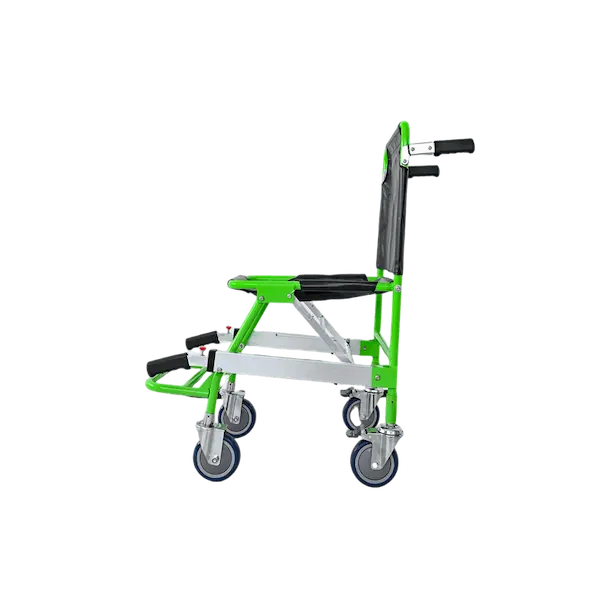
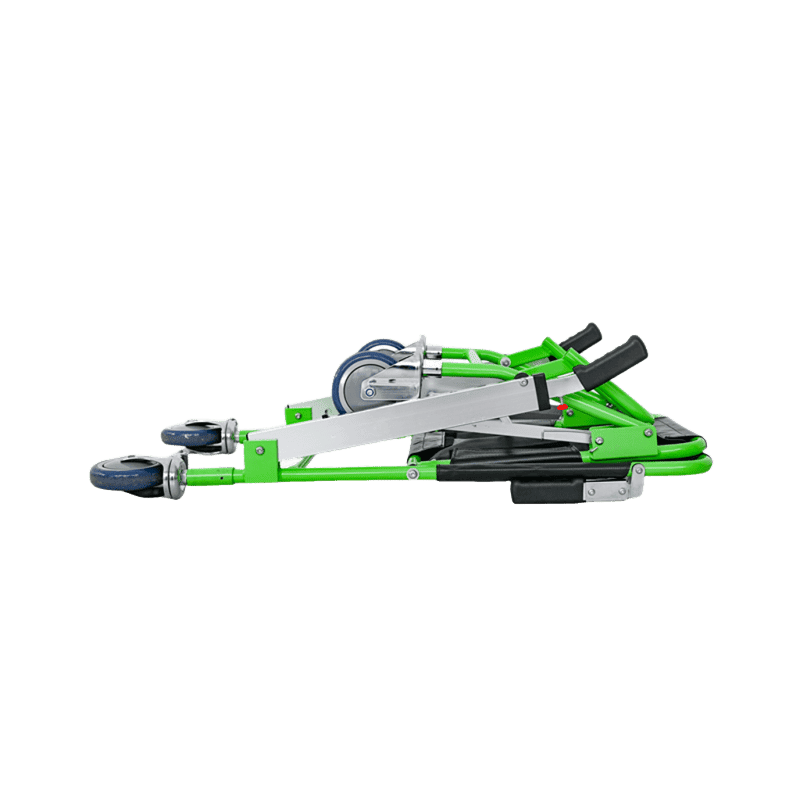
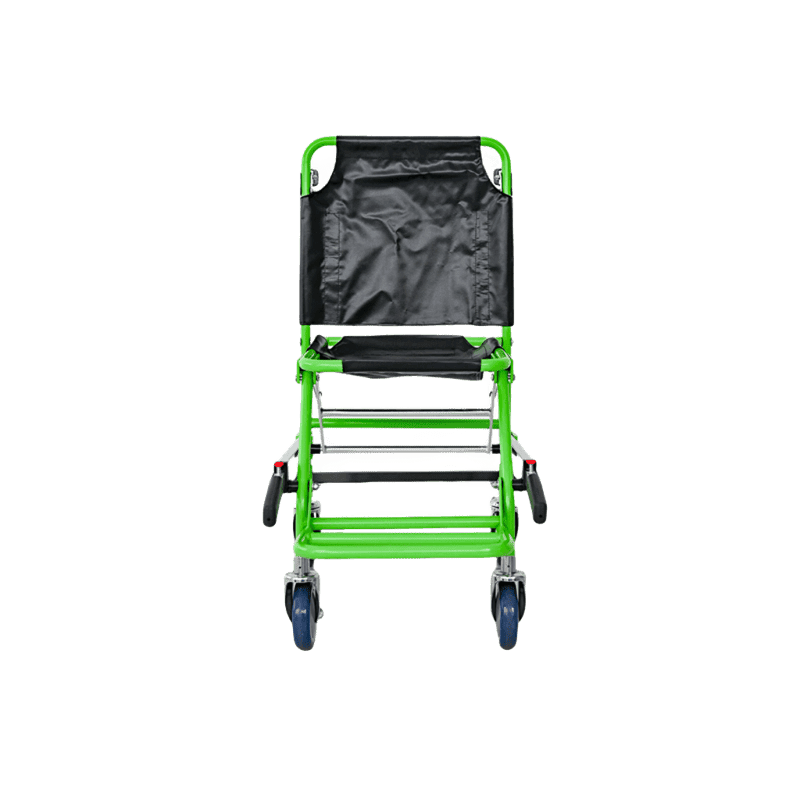
Professional Stair Chair EMS: The AM‑ST10 Tactical Evacuation Series
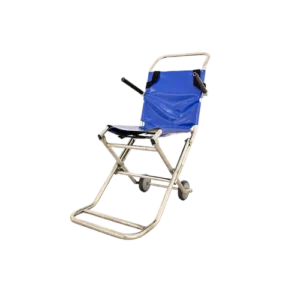
When seconds count, stairwells become the bottleneck. In dense cities and high‑rise responses, elevators can be delayed, locked out, or unsafe to use. Narrow landings, tight turns, and uneven steps make standard stretchers impractical. That is exactly why the AM‑ST10A/B stair chair ems line exists: to enable fast, controlled, and ergonomic patient extraction in places where a cot cannot go.
Built for pre‑hospital operations, AM‑ST10 is engineered for the durability, wipe‑down readiness, and real‑world handling that frontline teams demand. If you are an EMS director, procurement officer, or fleet manager, this page is designed to give you what you need to make a purchase decision: scannable specs, safety logic, and operational fit.
Request a quote (recommended above the fold):
Send your ambulance type (I/II/III), typical stairwell profile (straight vs. tight turns), and patient weight range. We will match AM‑ST10A or AM‑ST10B and provide pricing, lead time, and mounting guidance for your fleet.
1) Executive Summary: Seconds Count in EMS Transport (The Hook)
The problem: Urban stairwells are narrow, steep, and unpredictable. High‑rise incidents add elevator uncertainty, crowd control delays, and limited access—exactly when rapid movement matters most.
The solution: The AM‑ST10A/B stair chair ems series is a purpose‑built extraction tool for moving patients safely down stairs with less strain, better control, and faster turnaround between calls.
Authority signal: This equipment is built for the rigors of pre‑hospital emergency care—high frequency use, hard storage conditions, and fast wipe‑down infection control—so teams can rely on the same chair across routine transfers and high‑stress scenes.
2) Paramedic Ergonomics: Preventing Line‑of‑Duty Injuries
A stair chair ems purchase is not only about patient movement. It is also about protecting the crew. Repetitive lifting, awkward angles on stairs, and “one bad stairwell” moments are common contributors to musculoskeletal strain in EMS operations.
Handle design that supports safer posture
AM‑ST10 emphasizes ergonomic carry and control with:
- Telescopic front handles to improve reach and leverage on stairs
- Ergonomic rear lift handles designed to support a more natural lifting posture
This matters because better grip geometry helps reduce twisting, improves load sharing, and supports smoother coordination between the lead and tail operator.
Weight-to-strength ratio for real EMS realities
AM‑ST10 uses a high‑strength aluminum alloy structure that balances:
- Portability for carrying up multiple flights
- Strength for bariatric transport needs up to ≤ 159 kg / 350 lbs
A professional stair chair ems must be light enough for rapid response and strong enough for the majority of real‑world patient profiles.
3) Strategic Features: Built for the Chaos of the Field
Narrow-profile engineering for tight stairwells
Stairwells in older buildings and dense urban housing can resemble “brownstone‑style” constraints: tight corners, narrow corridors, and short landings. AM‑ST10’s slim handling profile helps teams navigate spaces where stretchers fail or require risky repositioning.
Quick-release restraints that prioritize speed and control
In EMS, speed is life—but speed must still be safe. AM‑ST10 uses a $3$‑point restraint system with oversized quick‑release buckles to secure the patient quickly and reliably. The design goal is practical: secure a patient in under $10$ seconds without fumbling.
One-click folding for ambulance compartment fit
A stair chair ems is only useful if it stores correctly in the rig. AM‑ST10’s one‑click folding logic is designed to fit common “stair chair” storage compartments in Type I, II, or III ambulances—reducing clutter and supporting consistent deployment on every call.
4) AM‑ST10A vs. AM‑ST10B: Choosing the Right Tactical Tool
Different systems run different calls. This section helps procurement teams choose based on operational realities rather than marketing.
AM‑ST10A (The Classic): rapid response portability
Best for agencies that prioritize:
- ultra‑lightweight carry for frequent stairwell calls
- fast deployment and simple storage
- consistent use across a mixed-response environment
AM‑ST10B (Enhanced Control): added support for demanding movement
Best for agencies that prioritize:
- more controlled movement on varied surfaces
- additional support wheels or enhanced braking behavior (configuration-dependent)
- more stability in frequent high‑rise operations
Decision logic: Choose the model that matches your call volume in stairwells, typical stair steepness, and whether your crews regularly handle higher-weight patients or complex environments.
5) Technical Specifications (Structured Data for Rich Snippets)
This table is designed for quick comparison and procurement validation. Google also favors clear tables as an “expertise” signal for product pages.
| Feature | AM‑ST10 Series Technical Data | Clinical / Field Advantage |
|---|---|---|
| :— | :— | :— |
| Material | Reinforced Aluminum Alloy | Rust‑resistant, easy to disinfect, lightweight for frequent deployment |
| Max Load Capacity | ≤ 159 kg / 350 lbs | Covers the majority of bariatric transport needs |
| Unfolded Size | Approx. 90 × 51 × 91 cm | Optimized for narrow-space maneuverability |
| Folded Size | Ultra‑compact 90 × 17 cm | Fits standard ambulance side compartments |
| Safety Belts | $3 \times$ quick-release buckled straps | Stabilizes torso, waist, and legs for safer descent |
6) Field Reliability & Compliance (Establishing Trust)
Infection control readiness (built for wipe-down reality)
AM‑ST10 stair chair ems features an orange/yellow PVC seat designed to be non‑permeable and fast to wipe down between calls. In field operations, “easy to disinfect” is not a nice‑to‑have. It is uptime.
Standards and safety language buyers recognize
For many agencies and distributors, referencing recognized standards helps establish credibility in procurement. If your documentation package supports it, position AM‑ST10 in the context of recognized transport equipment standards such as EN 1865 (commonly referenced for ambulance stretchers and transport equipment).
Reference: {{https://www.en-standard.eu/}}
Industry credibility link (what experienced stair chair ems readers trust)
For EMS professionals evaluating tools for urban response, JEMS is a widely recognized industry resource.
Reference: {{https://www.jems.com/}}
7) User Guide: Tactical Deployment of the Stair Chair EMS
A product that wins procurement must also win training. Below is a simple operational flow designed to be easy to adopt.
- Deployment
Open and lock the chair quickly (target: under $2$ seconds in trained hands).
- Patient loading
Confirm foot placement and patient posture. Secure the chest strap first, then complete the remaining restraint points.
- The descent (team coordination)
Assign clear roles: a lead operator and a tail operator. Maintain a consistent cadence and controlled speed to reduce sudden drops and patient anxiety.
8) FAQ: Answering the Frontline’s Toughest Questions
Can this stair chair ems be used for bariatric patients?
Yes. AM‑ST10 supports up to ≤ 159 kg / 350 lbs, covering most bariatric transport needs in routine EMS operations.
How does it perform on steep or uneven stairs?
Performance depends on stair geometry and operator technique. AM‑ST10 is designed for stability through wheel grip and handle control, with restraint systems that reduce patient shift during descent.
Is it compatible with standard ambulance mounting brackets?
AM‑ST10’s folding stair chair ems dimensions are designed to fit common ambulance stair chair compartments. For bracket compatibility, confirm your compartment dimensions and mounting style during quoting to ensure the best fit.
Final CTA: Get Pricing, Fleet Fit, and Delivery Lead Time
If your team needs a stair chair ems solution that performs in narrow stairwells, supports faster patient extraction, and reduces crew strain, the AM‑ST10 Tactical Evacuation Series is built for that mission.
To quote quickly, send:
- Your stair chair ems ambulance type (I / II / III)
- Typical stairwell constraints (narrow landings, sharp turns, high‑rise frequency)
- Patient weight range (including bariatric coverage needs)
- Preferred model (AM‑ST10A for lighter rapid response, AM‑ST10B for enhanced control)