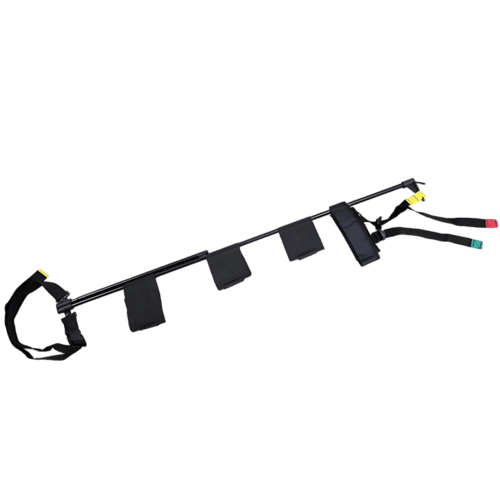
A closed mid-shaft femur fracture is one of the few pre-hospital injuries where your intervention directly changes the patient’s outcome before they reach a surgeon. Without traction, the fractured femur segments spasm and override each other, turning a contained bleed into a potential 1.5-liter hemorrhage into the thigh compartment. The AM-FA003 traction splint applies controlled longitudinal traction to realign the bone fragments, reduce muscle spasm, and tamponade internal bleeding—all before the ambulance doors close. It’s a mechanical solution to a mechanical problem, and when applied correctly, it transforms a screaming, hypotensive trauma patient into someone stable enough for the forty-minute transport to the trauma center.
The splint uses a telescoping aluminum frame that extends from 90 to 136 cm in the adult configuration and 80 to 118 cm in the pediatric. Traction is applied via a ratcheting mechanism with a tension indicator that shows the operator when sufficient force has been achieved—no guessing, no over-traction risking nerve damage. The ankle hitch is padded neoprene with a quick-release buckle, and the ischial pad at the proximal end is contoured to sit against the pelvic bone without compressing the perineum.
At 2 kg for the adult model and 1.8 kg for the pediatric, the FA003 is light enough that it doesn’t get left behind in the ambulance. The carbon fiber tube option drops the weight further while increasing rigidity, though most services find the standard aluminum version more than adequate. The splint folds into a compact carry case (100 x 26 x 21 cm for adult) that fits in a standard ALS bag side pocket. Deployment takes under ninety seconds with practice: position the splint alongside the uninjured leg for length reference, seat the ischial pad, attach the ankle hitch, ratchet to tension, secure the leg straps, done.
This is a single-purpose device for a single injury pattern, and that’s exactly why it works. Multi-purpose splints that try to handle everything from wrists to femurs invariably compromise on femur traction, which is the one application where getting it wrong has the highest stakes. The FA003 does one thing: isolate and stabilize a fractured femur. If your protocols include femur fracture management—and they should—this belongs on every ALS unit.
I carry both adult and pediatric FA003 sets in stock. Contact me for pricing, minimum order quantities, and lead times. If you’re training your crew on traction splint application, I can also put you in touch with instructors who specialize in pre-hospital orthopedic emergencies.
Frequently Asked Questions
What specifications should I review for this model?
Key specifications including dimensions, capacity, power requirement and material composition are provided in the model datasheet. Contact us with your project requirements for the complete specification sheet.
What documents are available for import?
Datasheet, user manual, packing information and applicable conformity documents are confirmed per destination market. Registration requirements vary by country and are reviewed project by project.
Can I request a sample or reference installation?
Sample availability and reference installation details are confirmed based on the product category and order volume. Contact us with your specific requirements.