I watched a veterinary surgeon in Guangzhou close a diaphragmatic hernia on a six-month-old kitten at 11 PM. Halfway through, she swapped blades twice — curved for the initial incision through skin and muscle, straight for the delicate work around the diaphragm, back to curved for closure. She did it without looking at the handle. Her hands knew the release mechanism. That’s the standard Rebirth is built to. Not “good enough for animals.” Good enough for a surgeon who’s been doing this fifteen years and has opinions about blade balance.
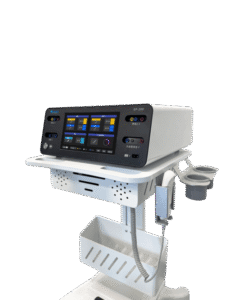
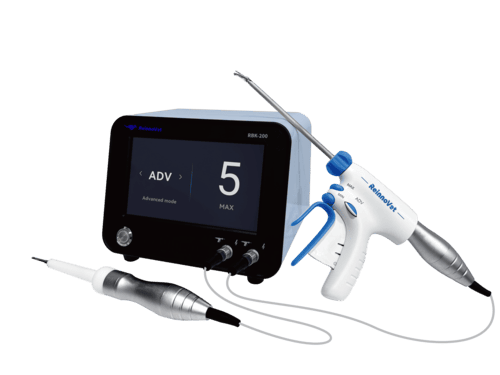
The RBK-200 is a veterinary surgical knife set — not scalpels, not disposable single-use blades, but precision reusable knives with interchangeable blades. The set includes a primary handle, three blade profiles (curved, straight, angled), a depth-stop collar, and a sterilization tray. Blades are medical-grade stainless hardened to Rockwell 56-58 — holds an edge through multiple procedures, soft enough to re-sharpen rather than discard. When you’re doing twenty spays a week and the disposable blade budget looks like a mortgage payment, a sharpenable blade pays for itself fast.
The handle is machined from a single piece of 316L stainless with a knurled grip and balance point at the index finger. Forty-two grams — light enough for fine motor control during a feline spay where your incision is under two centimeters, heavy enough for tactile feedback through the blade when cutting varying tissue densities. Three rounds of prototyping to get the weight right. Too light feels like cutting with a pencil. Too heavy fatigues the wrist during a three-hour ortho procedure.
Blade changes use a quarter-turn bayonet mechanism — push, twist, lock. No set screws, no tools. A surgeon in size 7.5 gloves swaps a blade in about three seconds while maintaining sterile field. The bayonet lock gives an audible and tactile click when engaged, so you know the blade is seated without looking.
Three profiles cover most small-animal soft tissue and ortho: curved (generalist, skin incisions, linea alba), straight (stab incisions, abscess lancing), angled (delicate dissection around vessels and nerves, where the angle keeps the handle out of your sightline to the tip). Each blade is individually serialized and ships with sharpness certification.
The depth-stop collar slides onto the handle and locks for consistent-depth incisions in mass removal and biopsy. Simple stainless ring with thumbscrew — optional, use it when uniform depth matters.
Sterilization tray is machined aluminum with silicone rests — each component gets a dedicated slot, blades don’t contact during autoclaving. Fits standard cassettes. Labeled with cycle parameters: 134 degrees Celsius, three minutes, vacuum recommended.
The Rebirth isn’t for every practice. Low surgery volume? Disposable scalpels are more cost-effective. But high-volume spay/neuter, specialty surgery, teaching hospitals cycling instruments through dozens of procedures weekly — the per-use cost of a reusable precision knife drops below disposables after about six months, and the surgical experience is on a different level. Reach out with your caseload and I’ll configure the blade set for what you actually cut.
Frequently Asked Questions
What specifications should I review for this model?
Key specifications including dimensions, capacity, power requirement and material composition are provided in the model datasheet. Contact us with your project requirements for the complete specification sheet.
What documents are available for import?
Datasheet, user manual, packing information and applicable conformity documents are confirmed per destination market. Registration requirements vary by country and are reviewed project by project.
Can I request a sample or reference installation?
Sample availability and reference installation details are confirmed based on the product category and order volume. Contact us with your specific requirements.