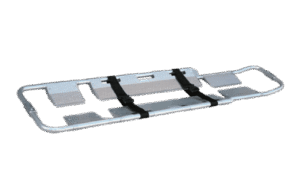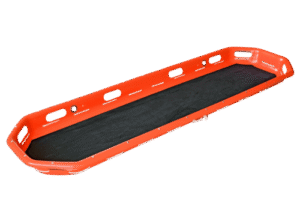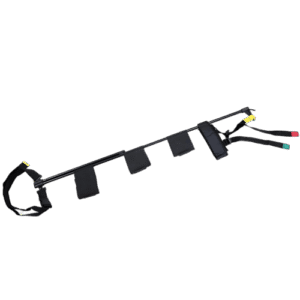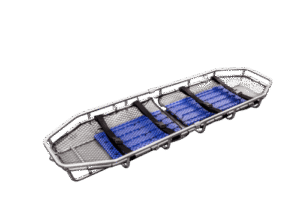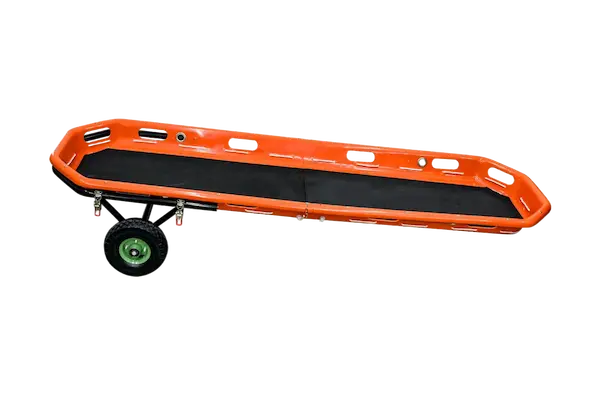
I designed the AM-BS006 for environments that chew up standard rescue gear and spit it out. If your rescue scenario involves a manicured hiking trail and a clear helicopter LZ, you don’t need this stretcher. If it involves an oil rig in the North Sea, a mine shaft three hundred meters underground, or a chemical plant where the air itself is corrosive — that’s what the BS006 was built for.
Let me walk you through what makes this different from our standard basket stretchers. The frame is reinforced — we’re not talking about a slightly thicker tube here and there. The entire aluminum alloy skeleton has been re-engineered with additional cross-bracing and load-bearing reinforcement. The PE shell is the same rotomolded polyethylene we use across the line, but the mounting points and stress distribution have been completely rethought. This thing is rated for 270kg under dynamic load. In a mine rescue, when you’re hauling a patient up a shaft at an angle with the stretcher bouncing against rock face, “rated” isn’t a marketing word — it’s the difference between a successful extraction and a catastrophic failure.
The wheels are 10-inch industrial casters, not the smaller ones you’d find on a standard basket. That’s intentional. In an industrial setting, you’re often dragging this across grated metal walkways, over cables, through debris. Small wheels catch. These roll. The four-point suspension hook system connects directly to helicopter hoists and crane rigging — we’ve tested the D-rings individually to failure and they hold far beyond what the frame itself is rated for, which is exactly how you want that failure chain to work.
What I hear most from the industrial rescue teams who use this is that they trust it. Trust isn’t something you get from a spec sheet. It comes from pulling a colleague out of a confined space at 3 AM, in the rain, with everything going wrong, and having the equipment do exactly what it’s supposed to do. The orange shell isn’t just for visibility — it’s high-visibility orange, the same pigment used in offshore survival gear, because when you’re coordinating a rescue across a rig deck in poor light, you need to see exactly where your patient is at all times.
The BS006 is heavier than our standard baskets, and I won’t apologize for that. Weight is strength here. If your operation is standard wilderness search and rescue, look at the BS004. If you’re operating in environments where the equipment gets punished as hard as the people do — mining, offshore, heavy industry — that’s why this one exists.
Model Comparison
| Specification | AM-BS006 | AM-BS007 | AM-BS010 |
|---|---|---|---|
| Expanded size | 221×63×19 cm | 261×63×27 cm | 202×65×75 cm |
| Folding | — | 221×63×27 cm | — |
| Load limit | 270 kg | 270 kg | 270 kg |
| Net weight | 15.2 kg | 17.2 kg | 21.5 kg |
| Wheel size | 10 inch | 8 inch | 20 inch |
Frequently Asked Questions
What specifications should I review for this model?
Key specifications including dimensions, capacity, power requirement and material composition are provided in the model datasheet. Contact us with your project requirements for the complete specification sheet.
What documents are available for import?
Datasheet, user manual, packing information and applicable conformity documents are confirmed per destination market. Registration requirements vary by country and are reviewed project by project.
Can I request a sample or reference installation?
Sample availability and reference installation details are confirmed based on the product category and order volume. Contact us with your specific requirements.