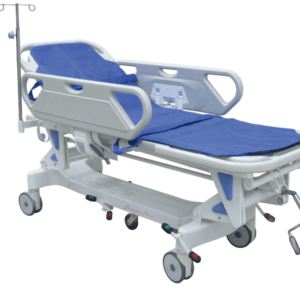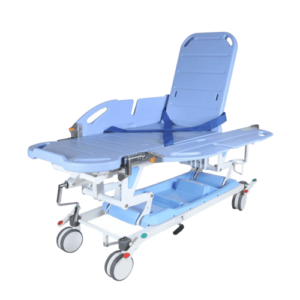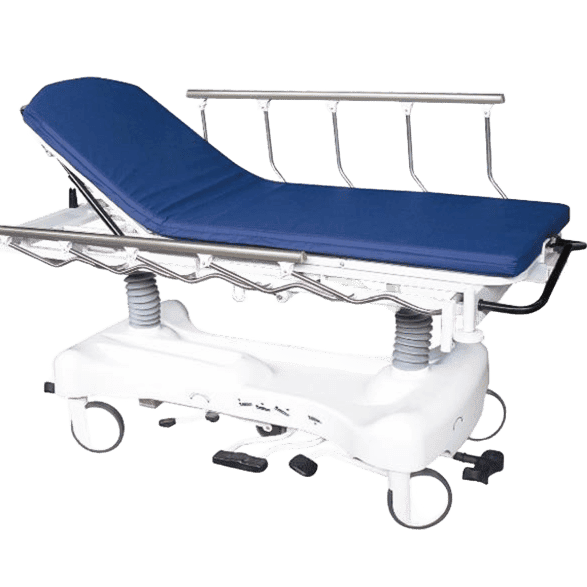
The YYTC1 is a hydraulic hospital transfer trolley, and the word “hydraulic” is the whole point. If you’ve spent any time in a hospital, you’ve seen the alternative: manual crank stretchers where a nurse has to squat down and spin a handle to raise or lower the bed surface. Ten transfers a shift, twelve shifts a week — that adds up to a lot of squats, a lot of time, and a lot of staff complaining about their knees. The YYTC1 replaces the crank with a foot pedal connected to two independent hydraulic pumps. Step on the pedal, the bed rises. Release, it stops. No bending, no cranking, no waiting.
The frame is galvanized steel with an electrostatic powder coat — the same corrosion protection used in outdoor infrastructure. In a hospital environment where surfaces get wiped down with aggressive disinfectants dozens of times a day, untreated steel would show rust within months. This frame won’t. The bed surface is split-frame design, with the backboard made of X-ray transparent bakelite. The patient doesn’t need to be transferred off the trolley for bedside X-rays — you slide the cassette under the bakelite panel and shoot through it. That eliminates one patient transfer per imaging session, and every eliminated transfer is a fall risk eliminated and a staff back saved.
Model Comparison
| Specification | AM-TC01D | AM-YYTC1 | AM-DJC1 |
|---|---|---|---|
| Type | Patient transport cart | Hydraulic transfer trolley | Docking exchange trolley |
| Dimensions | 1930×640 mm | 2120×840×550–860 mm | 1935×640×650/940 mm* |
| Height range | 530–860 mm (gas spring) 500–900 mm (crank) |
550–860 mm | 640–970 mm |
| Backrest | 0–75° / 0–80° | Dual pneumatic lift | 0–75° |
| Load capacity | — | Static 250 kg / SWL 135 kg | 250 kg |
| Guardrails | PP 2-piece flip | Full collapsible aluminum | PP side guards |
| Casters | 6″ central control + 5th wheel | Central brake, dust-proof | 4″ guide wheels |
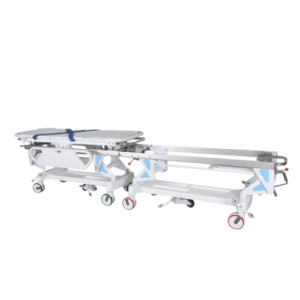
| Special | Gas spring or crank options | X-ray compatible, CPR, 2 hydraulic pumps, Oxford mattress | Inner/outer docking, anti cross-infection, aluminum rails |
The hydraulic system deserves a closer look because it’s where this trolley earns its place. Two independent pumps — if one fails, the other maintains function. The control pedals are positioned at both sides of the headboard, so the operator can adjust height from either side of the bed. Central locking brake pedals at both the head and foot end mean the trolley gets locked down wherever the operator is standing. The casters are dust-proof, which matters in a hospital where floor debris from dressings, tape, and dropped supplies can foul unprotected wheels.
Dimensions: 2120 by 840 millimeters, with height adjustable from 550 to 860 millimeters. Static load rating is 250 kilograms, safe working load is 135 kilograms. The guardrails are fully collapsible aluminum alloy — they drop completely below the bed surface, not just fold down halfway like some designs. That gives full lateral access for patient transfers. The package includes an antibacterial waterproof Oxford fabric mattress and a stainless steel IV stand. There’s a drainage groove integrated into the frame, and CPR functionality is built into the backrest release.
This is for the ER-to-ward transfer, the ward-to-imaging round trip, the post-op recovery bay to the surgical floor. It’s not an ambulance stretcher and it’s not an OR table. It’s the trolley that does the unglamorous, high-frequency work of moving patients around a hospital safely and efficiently. And doing it with hydraulics instead of a crank makes a bigger difference than most people realize until they’ve used both.