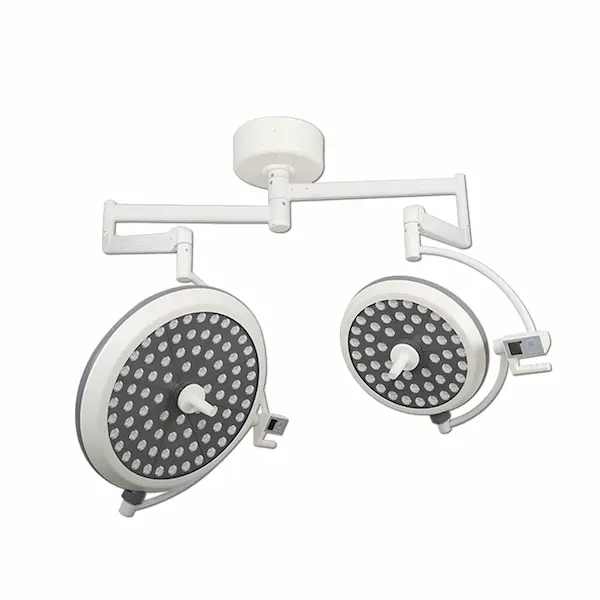
AM-LED700500 MTX veterinary surgical lights
veterinary surgical lights is a very classic and standard LED surgical light with an aluminum shell light head with diameters of 700mm and 500mm. It has undergone clinical trials in the market for over a decade and also has a very competitive price, suitable for most surgical operating rooms.
| LED700 | LED500 | |
| Illuminance(Lux) | 40,000-160,000 | 30,000-160,000 |
| Lamp bulb quantity | 80 pcs | 48 pcs |
| Brand of bulb | OSRAM | |
| Bulb life | >60,000 hours | |
| Color Temp(K) | 3700-5000 | |
| Color rendering index(Ra) | 85-98 | |
| Lightbeam depeth | 120cm | |
| Diameter of spot | 18-34cm | |
| Light adjust range | 1%-100% | |
| Temp rise(Operator head) | <1℃ | |
| Input power | AC100-240V,50/60HZ | |
| Best install height | 2.8-3.2m | |
Veterinary Surgical Lights: How Modern LED Shadowless Technology Upgrades the Small-Animal OR
In today’s animal hospitals, the operating room is expected to deliver human-level precision in a space that is often smaller, busier, and more variable than a human surgical suite. Whether you are performing a spay on a cat, repairing a fracture in a small dog, or treating an exotic pet with delicate anatomy, visibility is not a “nice-to-have.” It is a safety requirement.
Yet many clinics still rely on older halogen or basic examination lamps that create hard shadows, uneven illumination, and uncomfortable heat. Surgeons lean in, assistants reposition lights repeatedly, and the patient’s tissue can dry faster during longer procedures. These challenges are exactly why modern veterinary surgical lights have evolved into specialized, LED-based, shadowless systems designed for the realities of veterinary practice.
To solve these daily problems, our veterinary surgical lights series is built as a dedicated Pet Operating Light platform, engineered for stable illumination, accurate color, and consistent performance across different procedure types. If you are evaluating Animal Hospital Lighting Solutions for a new clinic, an OR upgrade, or a multi-room setup, understanding the technology behind the light will help you choose the right configuration with confidence.
Why veterinary surgical lights Quality Matters in Veterinary Surgery
A surgical light is not simply “bright.” True surgical performance depends on how the light behaves when the surgeon’s hands, head, and instruments move into the field. It also depends on how accurately the tissue color is rendered, and how comfortable the light remains during long procedures.
Shadowless Technology: Eliminating the Surgeon’s Blind Spots
Shadow formation is one of the most common frustrations in veterinary surgery, especially in small-animal cases where the surgical site is compact and the surgeon’s posture naturally blocks the beam.
A modern shadowless design uses a multi-LED array combined with a multi-facet or multi-aperture optical structure. In practical terms, the lamp head is engineered so that many light paths overlap. When one beam is blocked by a hand or instrument, other beams still reach the wound from different angles. This cross-beam illumination is what reduces “hard” shadows and maintains consistent brightness in deep cavities.
For veterinary surgeons, this matters most during:
- Tight abdominal surgery on small pets
- Deep wound exploration
- Orthopedic procedures where retraction and instrument density are high
High CRI and R9: Seeing Tissue as It Really Is
In an animal OR, distinguishing subtle differences in tissue color can directly affect outcomes. That is why color rendering is not just a specification on a brochure.
Our LED veterinary surgical lights are designed around:
- CRI > 95: High Color Rendering Index helps clinicians differentiate fine anatomical details such as muscle layers, small nerves, and vessel walls. It reduces the risk of “washed-out” tissue appearance, which can happen with low-quality LEDs.
- Strong R9 (red rendering): R9 measures how accurately deep red tones are displayed. In surgical fields with blood, red-rich organs, or inflamed tissue, strong R9 performance supports more reliable visual judgment. This is especially relevant in soft tissue surgery and dentistry where bleeding can be present and suction is frequent.
Adjustable Color Temperature: 3500 K to 5000 K for Visual Comfort
Different procedures, room colors, and clinician preferences demand flexibility. A color temperature adjustment range of 3500 K to 5000 K allows the surgical team to select a warmer tone for comfort or a cooler, higher-contrast tone for detail work.
Over long surgeries, the right color temperature can reduce eye strain and help the team maintain concentration. In busy clinics performing multiple cases per day, less visual fatigue can improve workflow and consistency.
Veterinary-Specific Design: Built for Heat Control and Infection Prevention
Veterinary environments have unique constraints: patient sizes vary widely, some rooms serve multiple purposes, and many clinics need fast turnover between procedures. A well-designed veterinary surgical light must support this reality.
Cool LED Source and Heat Management
Unlike traditional halogen systems, high-quality veterinary surgical lights are built to minimize heat directed toward the surgical site. LEDs do not emit infrared radiation in the same way halogen bulbs do, which helps reduce unnecessary warming and drying of exposed tissue during long cases.
This is not just about comfort. In prolonged procedures, preventing tissue dehydration can support safer handling and better healing conditions.
Temperature control is also part of broader OR management principles promoted by veterinary organizations. Referencing AAHA guidance can strengthen your clinic’s equipment decision-making and demonstrate alignment with recognized standards.AAHA
Infection Control: Smooth Surfaces and Sterilizable Handles
Infection prevention depends on how easy a light is to clean correctly, every time.
Veterinary surgical lights designed for clinical hygiene typically include:
- A fully enclosed lamp head to reduce dust traps and exposed gaps
- A streamlined housing that can be wiped with alcohol or hospital-grade disinfectants without complicated seams
- A removable focusing handle that supports sterilization, including high-temperature methods where applicable, so surgeons can adjust the light field without breaking sterile technique
This combination supports faster room turnover and more consistent cleaning protocols.
Flexible Installation Options for Different Clinic Layouts
Not every facility needs the same setup. That is why veterinary OR lighting should match the workflow, budget, and space constraints of the clinic.
A Mobile Veterinary Surgical Light is ideal for:
- Clinics with limited OR space
- Practices that perform procedures in more than one room
- Teams that want flexibility without construction work
Mobile units can provide strong performance for general surgery, wound care, and dentistry, especially when the clinic needs one high-quality light shared across multiple treatment areas.
Ceiling Mounted: Maximum Space Efficiency
A ceiling system is the best choice for:
- High-volume surgical rooms
- Clinics aiming for a clean, uncluttered floor area
- Facilities planning a dedicated OR upgrade
A Ceiling Mount Pet Surgery Lamp keeps the light stable, saves floor space, and supports smooth positioning above the surgical table, which is valuable during complex cases.
Wall Mounted: Compact Rooms and Specialty Areas
Wall-mounted models fit well in:
- Smaller examination rooms
- Dental suites
- Treatment rooms with limited ceiling structure
They can deliver targeted illumination while keeping equipment footprint minimal.
Clinical Applications: Where Advanced Lighting Makes the Biggest Difference
Modern veterinary surgical lights are not limited to one procedure type. The real value appears when a clinic expands services and needs consistent visibility across many scenarios.
Orthopedics
Orthopedic procedures often involve deeper surgical fields, retractors, and high instrument density. High illuminance and stable shadowless performance help clinicians maintain clear visibility when working inside joints or deep tissue planes.
Soft Tissue Surgery
Soft tissue work depends heavily on fine color discrimination. High CRI and strong red rendering support more accurate identification of vessels, fascia, and subtle tissue changes, especially when blood is present.
Veterinary Dentistry
Dental work requires:
- Precise angling
- Stable illumination in a small working area
- Fast repositioning as the clinician changes posture
A flexible arm design and reliable focus control can make dental workflows smoother and more consistent.
Maintenance and Durability: Practical Guidance for Clinic Owners
Choosing a veterinary surgical lights is only the first step. Long-term cost and uptime depend on durability and maintenance requirements.
Lifespan: 50,000+ Hours
A high-quality LED system typically delivers 50,000 hours or more of service life. For a clinic, this reduces:
- Bulb replacement frequency
- Downtime risk
- Long-term operating costs compared with halogen systems
Low Power Consumption
LED surgical lights consume significantly less power than traditional halogen lights while maintaining strong illumination. Over time, this reduces energy usage and can lower heat load in the room, which may also ease air-conditioning demand.
Standards and Quality Commitment
When purchasing veterinary surgical lights , clinics and distributors often look for evidence of safety and manufacturing control.
International standards like IEC 60601-2-41 cover safety and essential performance requirements for surgical luminaires.IEC While not every clinic will read the full standard document, referencing this framework helps buyers understand that the product category has defined performance expectations.
In addition, many buyers seek:
- CE compliance for applicable markets
- ISO-based quality management practices that support traceability and consistent production
Together, these elements provide more confidence for clinics building reliable operating rooms and for distributors supplying professional equipment.
FAQ: Veterinary Surgical Lights (SEO Coverage)
1) What is the best Lux level for veterinary surgery?
For most veterinary surgical applications, a recommended target range is 100,000 to 160,000 lux, depending on procedure type, working distance, and clinician preference. Higher lux levels are especially useful in deep cavities and orthopedic cases, while stable shadowless performance is equally important.
2) Can I use a human surgical light for pets?
In some cases, yes, but it is not always ideal. Veterinary practice often benefits from designs optimized for:
- Wider height adjustment to accommodate different table types and patient sizes
- More appropriate spot size control for small surgical fields
- Flexible positioning for multi-purpose rooms (surgery, dental, treatment)
A dedicated veterinary surgical light tends to fit clinic workflows better and can reduce repositioning during procedures.
3) How do I clean the LED veterinary surgical light?
Use your clinic’s standard cleaning protocol and follow the manufacturer’s instructions. In general:
- Wipe the lamp housing with approved disinfectants after each procedure
- Avoid abrasive materials that can damage coatings
- Use removable, sterilizable handles where available so sterile staff can adjust positioning safely
- Confirm compatibility of disinfectants with the light’s surface materials to avoid discoloration over time
However, regardless of the operating room, you not only need surgical lights, but also a pet operating table, anesthesia machine, pet cage and so on.