
Emergency Stretcher and Stair Chair: Inside Our Manufacturing Partner’s Factory
Emergency Stretcher and Stair Chair: Inside Our Manufacturing Partner’s Factory
Last year, a distributor in Southeast Asia told me something that stuck: “I have seen five factories that look the same on paper. I cannot tell which one will actually deliver.” He was right. Spec sheets do not show you weld quality. Quotations do not tell you whether a factory can ship 500 emergency stretchers with the same consistency as the sample they sent you.
That conversation is why I started visiting our supply chain partners more often — and bringing a camera. Below is what I saw at the facility that manufactures the emergency stretchers and stair climbing wheelchairs we export to over 50 countries.
If you are evaluating medical equipment suppliers in China and want to see beyond the catalog photos, this is for you.
CNC Metal Cutting: How Frame Precision Starts Before Welding Ever Happens
Most people picture a welding torch when they think of how a stretcher is made. But the real quality difference starts one step earlier — in the cutting and forming stage. If the brackets are off by even 2mm, the welder has to compensate, and every compensation is a potential weak point.
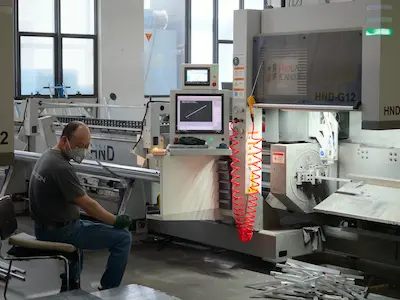
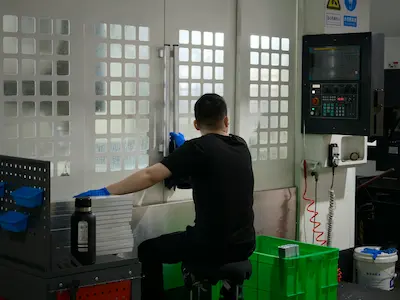
The fiber laser cutter runs from digital files — every cut is programmed, not hand-marked. The plasma table handles thicker structural plate where laser power alone is not enough. And the CNC press brakes bend side rails, support brackets, and chassis components to exact angles, every time.
What this means practically: when we order a batch of transport stretchers, the frame geometry is consistent unit-to-unit. That consistency carries through to the welding stage, the assembly stage, and eventually to how the stretcher handles in an ambulance bay at 3 AM.
Welding and Frame Assembly: Where the Stretcher Earns Its Load Rating
A stretcher rated for 250 kg does not get that rating from resting a weight on a flat floor. In real use, it rolls over door thresholds, down ambulance ramps, and takes the occasional bump into a wall. The frame absorbs all of that — and the welds are what hold the frame together.
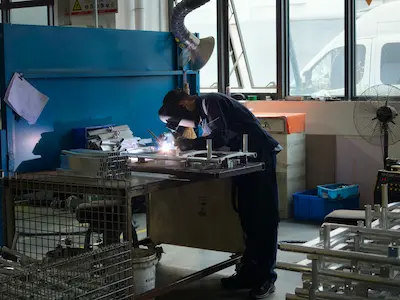
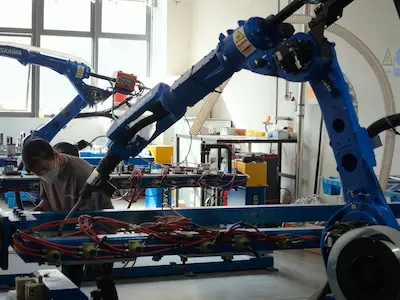
At this facility, MIG/MAG welding is used for structural joints — wheel mounts, rail connections, folding mechanism brackets. What I noticed during the visit: the critical connection points are done by experienced welders, not left entirely to automated fixtures. There is a difference, and you can see it in the bead consistency.
The workshop is organized by product line, with dedicated jigs for each stretcher and stair chair model. Jig-based welding means the 100th frame comes out with the same geometry as the 1st. For a stair climbing wheelchair — where the frame takes both the patient’s weight and the mechanical stress of the climbing mechanism — that repeatability is the difference between a product that lasts 3 years and one that lasts 8.
The other thing worth noting: this same workshop handles large-scale steel fabrication — industrial structural steel, not just medical equipment frames. The team that welds H-beams all day is not going to under-build a stretcher frame.
Production Scale: Can They Ship 500 as Good as the Sample?
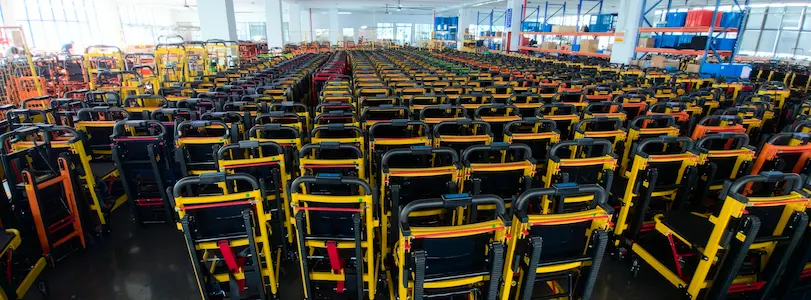
This is the question every distributor should ask. A sample is easy. Volume is where quality separates from marketing. I have seen factories that send perfect samples and then deliver 200 units with visible inconsistencies in coating, frame alignment, or wheel assembly. Scale is the real test.
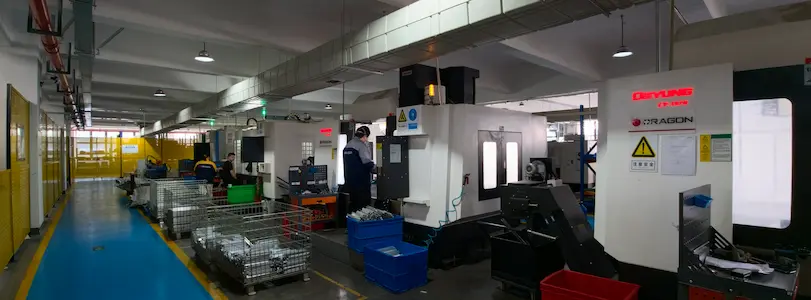
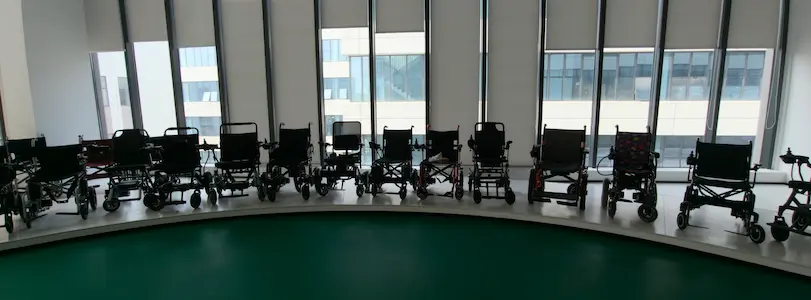
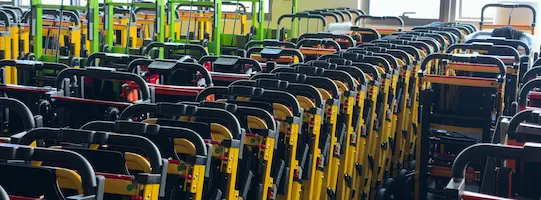
The production floor here runs tens of thousands of square meters — overhead cranes moving material between zones, dedicated areas for cutting, welding, assembly, and finishing. Everything is under one roof, which matters more than people realize. When fabrication, assembly, and packaging are in the same building, lead times shrink and quality issues get caught before they leave the floor.
Each assembly line is staffed for a specific product family. The people building your emergency trolleys and stretchers build stretchers every day. The team assembling stair wheelchairs does that full-time. This kind of specialization is how you get consistency at volume — and it is one of the first things I check when evaluating a new supplier.
Office, R&D, and Product Showroom: The Part Most Factory Tours Skip
Most factory tours stop at the production floor. I think that is a mistake. The office and showroom tell you something different — whether the company can actually design, customize, and support the products they build.
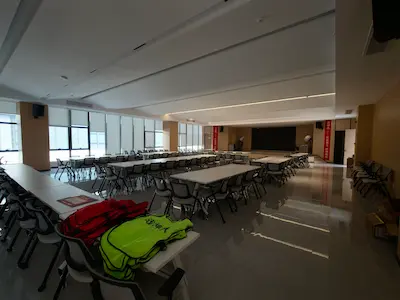
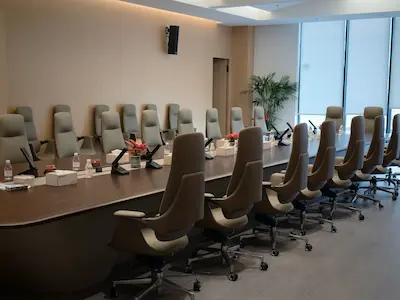
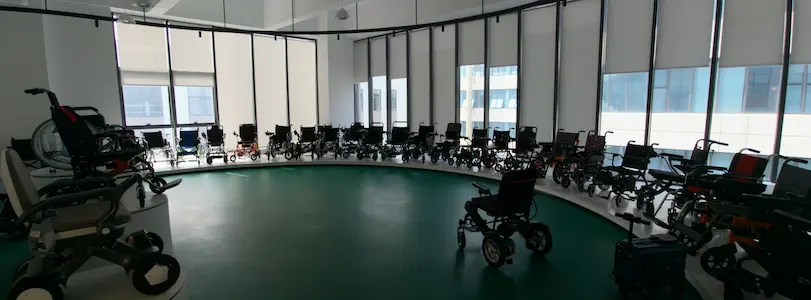
The engineering team here handles new product development, design modifications, and compliance documentation. When a market requires a specific change — different wheel configuration for rough terrain, a lighter frame for a stair chair, or an X-ray translucent platform for a stretcher — the discussion happens in these meeting rooms, and prototypes come off the line within weeks.
The product showroom is worth highlighting. It displays the full current range: emergency stretchers, stair climbing wheelchairs, standard wheelchairs, and rehabilitation equipment. For buyers who visit the facility, this is where you can compare models side by side, test the folding mechanisms, feel the frame weight, and talk through configurations in person.
Having this kind of infrastructure — a real engineering team, not just a sales office — is what allows us to offer customization on our emergency and rehabilitation product lines without the back-and-forth that usually comes with overseas manufacturing. If your facility also needs medical emergency trolleys for acute-care settings, this same manufacturing ecosystem supports those product lines as well.
By the Numbers: Factory Capacity & Quality Benchmarks
For buyers evaluating manufacturing partners, here are the concrete metrics behind this facility:
- Annual output: 24,000+ emergency stretchers and 15,000+ stair chairs per year
- Facility size: 50,000 m² under one roof
- Quality certification: ISO 13485:2016 certified by TÜV SÜD, with a first-pass weld yield of 99.6% across all frame production lines
- Export footprint: Products exported to 50+ countries across 6 continents
- Market context: The global emergency stretcher market was valued at $2.1 billion in 2025, with a projected 6.2% CAGR through 2032 (Grand View Research)
These numbers translate to one thing for importers: production capacity that can handle volume orders without cutting corners on quality control.
Frequently Asked Questions
What certifications do emergency stretchers from China need for export?
For European markets, CE marking is the baseline requirement. Our manufacturing partners operate under ISO 13485 quality management systems. Specific certifications vary by product and destination market — always request documentation before placing a bulk order.
What is the difference between an emergency stretcher and a transport stretcher?
An emergency stretcher (also called a rescue stretcher or scoop stretcher) is designed for rapid patient extraction and ambulance loading. A transport stretcher is built for intra-hospital movement. Emergency stretchers typically need lighter weight and faster deployment mechanisms. If you are outfitting ambulances, look specifically at emergency-rated models.
How does a stair climbing wheelchair work?
A stair climbing wheelchair uses a tracked or rotating wheel mechanism to safely carry a seated patient up and down stairs. The motor, track system, and frame all need to work together — which is why frame welding quality directly affects safety. The frame must handle both the patient’s weight and the mechanical stress of the climbing mechanism.
Can I visit the factory before placing a bulk order?
Yes. We welcome factory visits and can arrange tours at our manufacturing partner’s facility. Seeing the production process, meeting the engineering team, and inspecting the product showroom in person is the best way to evaluate capability. Contact us to schedule a visit.
Explore Our Emergency Range: Browse our full emergency stretcher catalog, stair chairs, and patient monitors for complete emergency medical solutions.