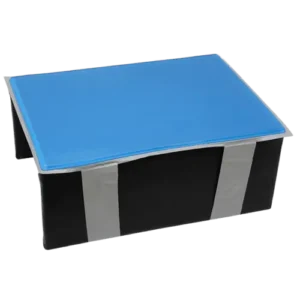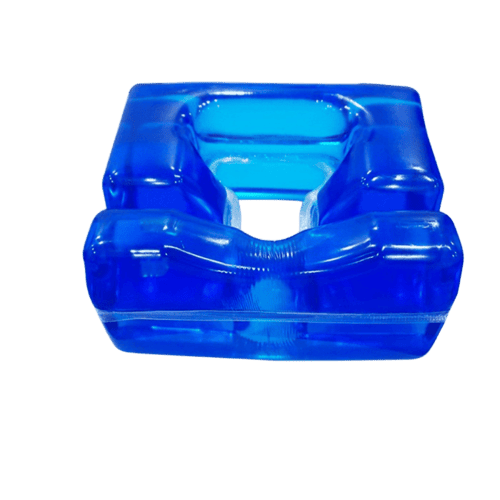
Here’s something I learned shipping the AM-TW-001 to smaller hospitals across Southeast Asia and into African surgical mission programs: not every OR table has the real estate for a 28cm-wide head pad. You walk into a pediatric neurosurgery suite in a regional hospital in Thailand, or a mobile surgical unit running cases out of a converted shipping container in Kenya, and the table is narrower — sometimes 40cm across, sometimes less. The standard 001 overhangs the edges, which kills the anti-slip performance entirely because the grip surface isn’t making full table contact. And the patient geometry is completely different. A six-year-old’s facial anatomy — the interzygomatic distance, the frontonasal angle, the mandibular width — can’t fill a full-size adult donut. The contact points shift. The pressure distribution map changes. Areas meant to carry weight float in open space, and areas meant to float get compressed. That mismatch undermines the very protection you’re trying to provide. The AM-TW-001-1 was built specifically to eliminate that mismatch.
The 001-1 is the compact variant — 24×20×10cm versus the standard 28×24×14cm. Same polymer gel core formulation. Same donut geometry and same six-landmark contact pattern. The central void is proportionally scaled so it still clears the eyes, nose, and endotracheal tube at the smaller dimensions. We didn’t use a cheaper gel or a thinner shell just because the form factor shrunk — the thermal stability across intraoperative temperature range, the chemical resistance to iodine-based preps and alcohol cleaning, and the autoclave-compatible outer shell are identical to the full-size 001. The only things that change are the dimensions and the weight. The anti-slip base performs correctly on narrower tables because the entire pad sits on the table surface, edge to edge, with full contact area. The gel’s viscoelastic response — deforming under load, recovering instantly on release — is exactly what you get from our full-size neuro pads, because we cast it from the same polymer batch.
If you’re a dedicated pediatric neurosurgery center, the 001-1 is your daily driver — it’s the right size for your patient population and the geometry matches the anatomy you’re working with. If you’re running a mixed caseload with both adult and pediatric prone procedures, stock both the 001 and the 001-1 and match the pad to the patient by facial width. For mission hospitals and mobile surgical units where table width is a genuine hardware constraint, the compact is the only version that physically fits. The gel formulation, donut geometry, pressure-distribution contact pattern, and outer shell durability are identical to the full-size pad — only the dimensions change, and they change for a reason.
Frequently Asked Questions
What specifications should I review for this model?
Key specifications including dimensions, capacity, power requirement and material composition are provided in the model datasheet. Contact us with your project requirements for the complete specification sheet.
What documents are available for import?
Datasheet, user manual, packing information and applicable conformity documents are confirmed per destination market. Registration requirements vary by country and are reviewed project by project.
Can I request a sample or reference installation?
Sample availability and reference installation details are confirmed based on the product category and order volume. Contact us with your specific requirements.