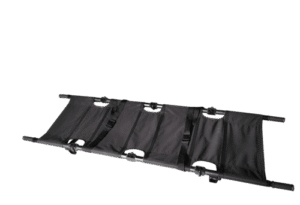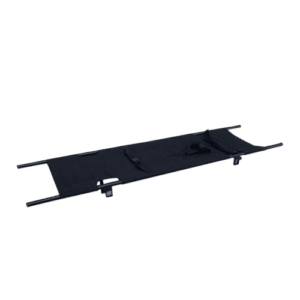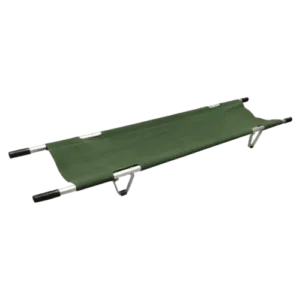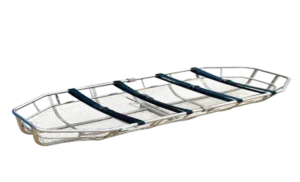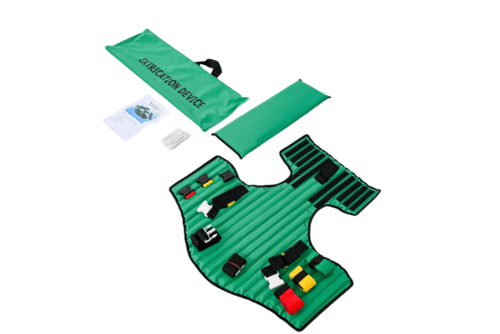
The KED is the piece of equipment you hope never to need, but when you arrive at a two-car collision on a highway off-ramp and the driver is conscious but pinned behind the wheel with neck pain radiating into both shoulders, nothing else does the job. The AM-FA005 wraps around the patient’s torso while they’re still seated in the vehicle, immobilizes the cervical, thoracic, and lumbar spine as a single unit, and allows the rescue team to rotate and extract the patient onto a long spine board without flexing, extending, or rotating the spinal column. This is not a transport stretcher—it’s an extrication tool, and using it correctly can mean the difference between a bruised sternum and a C5 incomplete.
The device consists of a rigid torso wrap with integrated head and neck support, secured by nylon buckles and safety straps in a specific sequence: torso first, then head, then legs. The torso section uses high-density polyethylene panels that conform to the patient’s body shape while maintaining rigidity under load. The head support includes a built-in cervical collar attachment point, and the leg straps prevent the device from riding up during the extraction maneuver. Every strap is color-coded to the application sequence—yellow for torso, red for head, black for legs—so even a responder using the device for the first time under stress can follow the order.
We produce the FA005 in two sizes: adult and pediatric. The adult model accommodates patients with a torso circumference up to 130 cm; the pediatric model handles torso circumferences up to 95 cm. Both versions pack flat for storage—adult at 86 x 27 x 42 cm, pediatric at the same footprint but lighter. The adult version weighs 3.4 kg per unit (packed five to a case, 17 kg total), and the pediatric weighs 2.5 kg (eight to a case, 20 kg total). The weight difference matters because you don’t want the device itself adding unnecessary load to a patient’s spine during the lift-and-rotate maneuver.
This device is standard equipment for fire rescue squads, highway patrol medical units, and any EMS team that responds to motor vehicle accidents. It’s not a stretcher replacement, not a transport device, and not something you improvise with—it’s a purpose-built extrication tool for a very specific clinical scenario. If your team doesn’t have one on every response vehicle that might encounter a trapped patient, you’re working without the right tool for the job.
I stock both adult and pediatric FA005 units in Shanghai. If you need to outfit a rescue fleet or replace aging KEDs that have been sitting in the equipment bay since 2012, contact me and I’ll get you pricing and delivery timelines for your quantity.
Frequently Asked Questions
What specifications should I review for this model?
Key specifications including dimensions, capacity, power requirement and material composition are provided in the model datasheet. Contact us with your project requirements for the complete specification sheet.
What documents are available for import?
Datasheet, user manual, packing information and applicable conformity documents are confirmed per destination market. Registration requirements vary by country and are reviewed project by project.
Can I request a sample or reference installation?
Sample availability and reference installation details are confirmed based on the product category and order volume. Contact us with your specific requirements.