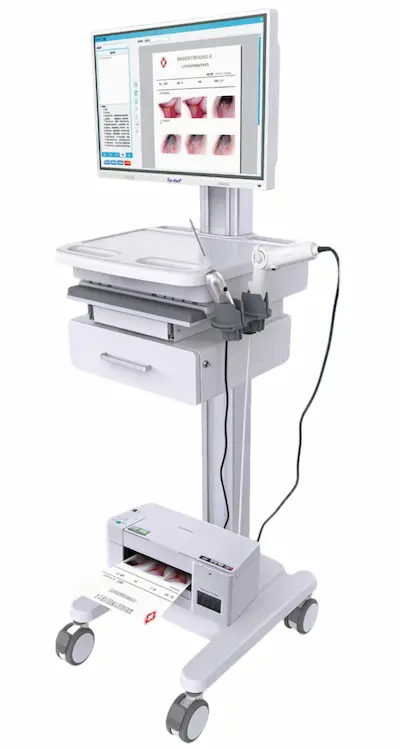
The Dual-Scope system is a single-tower endoscopic imaging platform that accepts both rigid and flexible endoscopes across ENT, urology, gastroenterology, and gynecology, with a 24-inch HD monitor and LED light source.
Key Specifications
| Parameter | Value |
|---|---|
| Imaging | HD camera control unit with automatic rigid/flexible scope recognition |
| Light Source | LED, adjustable intensity |
| Monitor | 24-inch HD medical monitor |
| Cart | Mobile cart with locking casters |
| Scope Compatibility | Rigid and flexible |
| Scope Option | Reusable or disposable |
Features
- HD camera control unit that automatically recognizes rigid or flexible scopes and adjusts imaging parameters
- LED light source with adjustable intensity
- 24-inch HD monitor on a mobile cart with locking casters
- Simultaneous dual-scope operation with a single screen
- Supports ENT, urology, gastroenterology, and gynecology scope combinations
- Disposable endoscope option for reduced reprocessing workload
Applications
Hospitals consolidating endoscopy investment across ENT, urology, gastroenterology, and gynecology, including combined rigid and flexible scope procedures.
CE marking and ISO 13485 documentation can be confirmed for the specific model, configuration, legal manufacturer, and destination market.
Frequently Asked Questions
What specifications should I review for this model?
Key specifications including dimensions, capacity, power requirement and material composition are provided in the model datasheet. Contact us with your project requirements for the complete specification sheet.
What documents are available for import?
Datasheet, user manual, packing information and applicable conformity documents are confirmed per destination market. Registration requirements vary by country and are reviewed project by project.
Can I request a sample or reference installation?
Sample availability and reference installation details are confirmed based on the product category and order volume. Contact us with your specific requirements.